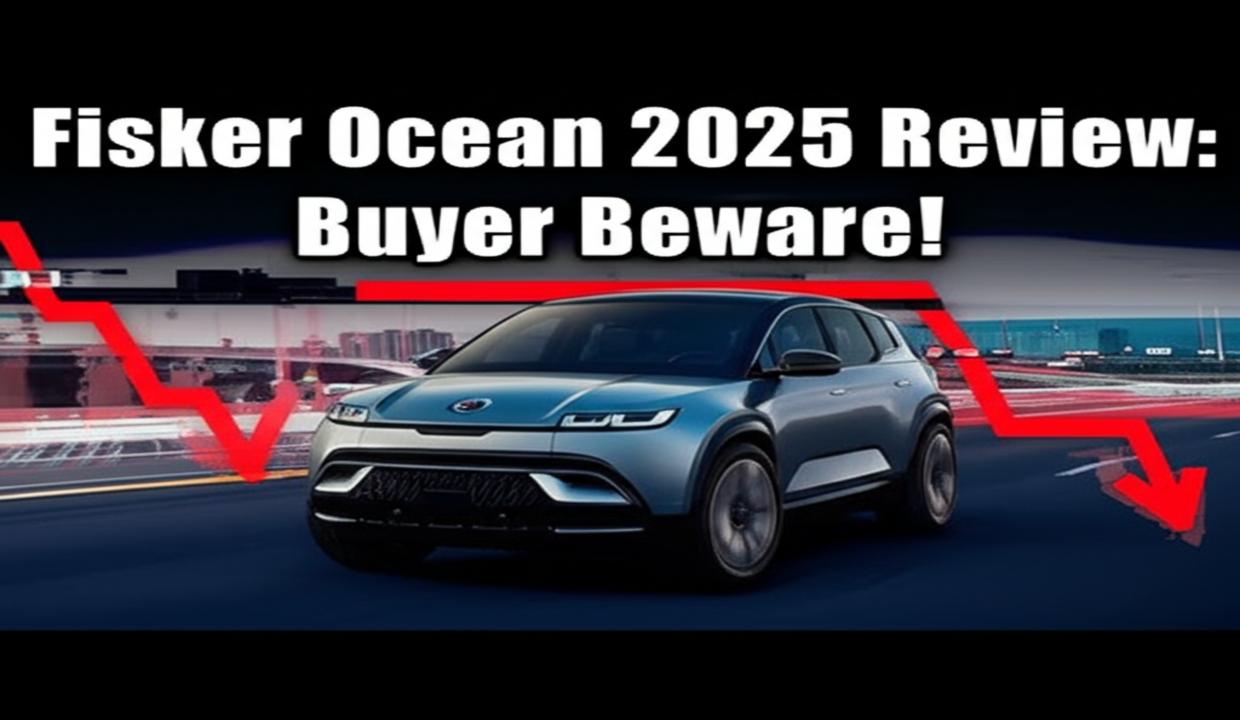
Welcome to our in-depth look at the Fisker Ocean 2025 review, a distinctive electric SUV that has certainly made waves, albeit for a mix of reasons. While our prompt’s title uses “Fiskars,” this comprehensive article focuses squarely on the electric vehicle, the Fisker Ocean 2025, as detailed in the latest information. This vehicle aimed to disrupt the EV market with its unique styling and sustainable approach. However, its journey has been anything but smooth.
In this complete guide, we will dive deep into everything you need to know about the Fisker Ocean. We’ll cover its performance, innovative design, interior features, and crucial ownership experience. We’ll also address the challenges that have overshadowed this promising EV, helping you decide if the Fisker Ocean 2025 is the right choice for you.
Main Highlights: Fisker Ocean 2025 Review
The Fisker Ocean 2025 stands out with its striking design and eco-friendly materials. It promised a fresh perspective on electric mobility. Despite its appealing aesthetics and a respectable electric range, the vehicle has unfortunately faced significant hurdles. These include quality control issues and, more critically, the financial instability of its manufacturer, Fisker Inc.
Here’s a quick overview of what the Fisker Ocean brings to the table:
- Distinctive Design: A unique blend of American and European styling, manufactured by Magna Steyr.
- Eco-Conscious Interior: Features bio-based and recycled materials, emphasizing sustainability.
- Innovative Features: Includes the popular “California Mode” and an optional solar roof.
- Solid Performance: Offers multiple powertrain options, with decent range figures for its class.
- Ownership Uncertainty: Severely impacted by the manufacturer’s bankruptcy, leading to support and software concerns.
- Value Depreciation: Notorious for rapid value loss, a key point for potential buyers.
Performance and Key Features
The Fisker Ocean 2025 was designed with versatility in mind, offering various powertrain configurations to suit different drivers. The base Sport version provides a healthy 275 horsepower, delivering a spirited enough drive for most daily commutes. This model is paired with a 73 kWh battery, which offers an estimated range of around 288 miles.
For those seeking more exhilaration, the Ultra version significantly boosts power output. It delivers up to 540 horsepower, transforming the Ocean into a much quicker machine. Impressively, real-world tests have reported a maximum range of up to 358 miles under certain optimal conditions, showcasing its long-distance capability.
Regarding driving dynamics, the Fisker Ocean generally offers a solid and composed ride. While it isn’t overtly sporty, it excels as a calm and comfortable cruiser, particularly on highways. The chassis feels robust, a testament to its manufacturing by Magna Steyr in Austria, which adds a layer of structural integrity.
However, the driving experience isn’t without its quirks. Some drivers have noted an inconsistent feel from the regenerative braking system, which combines with traditional friction brakes. This can lead to a less predictable stopping experience than in some competitors. Additionally, while generally comfortable, the ride can exhibit some surface turbulence on rougher roads and a slight bounciness over larger bumps.
Early promises of advanced driver aids, such as adaptive cruise control, unfortunately never materialized due to Fisker’s financial woes. This leaves the Ocean with only basic cruise control, a notable drawback when compared to other EVs in its segment that offer comprehensive assistance systems. For more detailed performance insights, you can check out reviews like the one from Top Gear’s take on the Fisker Ocean.
Design, Interior, and Comfort
From an aesthetic perspective, the Fisker Ocean 2025 truly stands out. Designed in sunny California, its exterior is a unique blend of American design cues and a compact SUV silhouette that subtly reminds some of a Range Rover Evoque. It features a wide, planted stance and sharp, modern lines that give it a distinctive presence on the road. The vehicle’s manufacturing by Magna Steyr in Austria ensures a robust build quality and adds a touch of European flair to its overall design.
Step inside the Fisker Ocean, and you’re greeted by a tidy, moderately upscale cabin. A key focus for Fisker was sustainability, and this is evident throughout the interior. The car incorporates approximately 50 kg of bio-based and recycled materials, including components made from plastic bottles and recycled tires. This commitment to eco-conscious design is a significant selling point for environmentally minded buyers.
The interior feels spacious, offering ample room for passengers. Thoughtful details are scattered throughout the cabin, enhancing the user experience. One of the most talked-about features is the “California Mode.” With a single touch, this mode simultaneously opens all side windows, the rear liftgate glass, and the optional semi-transparent solar roof. It creates an incredible open-air, airflow experience that truly embodies the Californian lifestyle.
Speaking of the solar roof, it’s an innovative addition that can generate up to an estimated 1,500 miles of energy per year, depending on sunlight exposure. While a clever concept, some users have noted a lack of detailed feedback screens to monitor its energy contribution in real-time. Despite this, it remains a unique feature that sets the Ocean apart from many competitors.
However, not everything is perfect within the cabin. Rear visibility can be somewhat limited, which is a common complaint for SUVs with sloping rooflines. Although the Ocean includes a digital rear-view mirror, some drivers find it compromises depth perception, making it less intuitive than a traditional mirror. For another perspective on its design and interior, consider reading the insights from Autocar’s Fisker Ocean review.
Technology and Safety
The Fisker Ocean 2025 aimed to integrate cutting-edge technology, particularly within its cabin. Dominating the dashboard is a large 17-inch touchscreen, which serves as the central hub for infotainment, navigation, and vehicle settings. This screen rotates from a portrait to a landscape orientation depending on the driving mode, a unique and eye-catching feature that garnered significant attention. While impressive in concept, the actual software experience has been a source of frustration for many owners.
Early models, and even later ones, were plagued with software glitches and missing updates. These issues ranged from minor annoyances to significant operational problems, affecting everything from basic functionality to the reliability of key fob detection. The promise of over-the-air (OTA) updates, crucial for modern EVs, often went unfulfilled or was severely delayed, leaving owners with an incomplete and sometimes buggy experience.
When it comes to driver assistance and safety, the Ocean fell short of expectations, especially considering its price point and the advanced features prevalent in the EV market. As mentioned earlier, advanced systems like adaptive cruise control were promised but never delivered due to Fisker’s financial collapse. This means the vehicle relies on more basic cruise control, a noticeable omission when competitors offer sophisticated semi-autonomous driving capabilities.
Safety features typically include standard airbags, stability control, and common active safety aids. However, the lack of fully functional advanced driver-assistance systems (ADAS) diminishes its competitive edge. The braking system, which blends regenerative and friction braking, has also been described as feeling “odd” by some reviewers, requiring a period of adjustment for drivers to achieve smooth stops. This combination can lead to a less linear braking feel than expected.
Ultimately, while the intention for a tech-rich experience was there, the execution and long-term support for the Fisker Ocean’s technological suite have been severely hampered. This incomplete technology package, combined with software inconsistencies, has been a major point of concern for owners and potential buyers. The promise of innovative features was strong, but the delivery struggled to keep pace.
What’s New in 2025?
When discussing what’s “new” for the Fisker Ocean 2025, it’s important to frame this within the unique context of the vehicle’s manufacturer. Unlike traditional car models that receive annual refreshes or significant updates, the “2025” in the context of the Fisker Ocean doesn’t signify a new generation or a host of upgraded features. Instead, it refers to the vehicle’s continued existence and market presence into this year, albeit under incredibly challenging circumstances.
The most significant “news” for the Fisker Ocean as we enter 2025 revolves not around product enhancements, but around the financial health and ultimate bankruptcy of Fisker Inc. This corporate instability has had profound implications for the vehicle itself. Production has halted, and future development, including crucial software and hardware improvements, has largely frozen.
Therefore, for the Fisker Ocean 2025, what’s “new” is the harsh reality of ownership without manufacturer support. Buyers purchasing or owning the vehicle in 2025 face an uncertain future regarding warranties, spare parts, and especially software updates. The initial promise of a truly innovative and sustainable EV remains, but the operational support required to deliver on that promise is largely absent.
Essentially, the “2025” model year for the Fisker Ocean represents a continuation of a product that showed great potential but is now a testament to the risks involved in investing in fledgling EV startups. It highlights the importance of not just a compelling product, but also a stable and robust company behind it. This situation makes a Fisker Ocean 2025 review particularly critical for anyone considering this unique electric SUV.
Ownership Experience and Reliability Concerns
The ownership experience of the Fisker Ocean 2025 has become perhaps its most defining, and unfortunately, most negative, characteristic. While the vehicle initially impressed with its design and range, the reality of living with it has proven to be a significant challenge for many. A key concern highlighted by owners and independent tests is the alarming rate of depreciation.
One notable owner review video from December 2024 painfully illustrated this point, showing a tested unit losing approximately 80% of its value within a single year. This extreme depreciation makes the Fisker Ocean a highly risky investment from a financial standpoint, unlike most other vehicles, particularly EVs which tend to hold value better in their early years.
Beyond the financial hit, owners have reported a slew of reliability issues. Software glitches are a recurring theme, ranging from minor annoyances to critical failures. These include problems with the infotainment system, inconsistent charging, and difficulties with key fob detection. The lack of timely and effective software updates, a cornerstone of modern EV ownership, has exacerbated these issues, leaving many owners feeling unsupported.
Fisker Inc.’s well-publicized bankruptcy has compounded these problems exponentially. With production halted and the company in financial distress, the future of software support, warranty claims, and even access to replacement parts is highly uncertain. This corporate instability directly impacts the overall ownership experience, transforming a potentially exciting vehicle into a source of considerable stress and frustration for its buyers.
The consensus among many who have reviewed or owned the vehicle is that while the Fisker Ocean possesses appealing design and solid EV fundamentals, its corporate instability and the resulting incomplete tech features and ownership concerns make it a very risky choice. For an expert take on its ownership woes, you can refer to insights from Green Car Reports’ post-mortem Fisker Ocean EV test drive review.
Market Position and Future Outlook
When the Fisker Ocean was first conceived, it aimed to carve out a significant niche in the rapidly expanding electric SUV market. It was developed with mass production in mind, demonstrating a clear ambition to compete with established players. Its clean design, innovative use of sustainable materials, and features like the “California Mode” positioned it as a fresh, eco-conscious alternative.
Initially, it showed immense promise, capturing attention with its distinct personality and the vision of a company focused on environmentally responsible mobility. However, the subsequent financial collapse of Fisker Inc. has entirely reshaped its market position. What was once a promising challenger is now largely a cautionary tale of startup volatility in the automotive world.
The future outlook for the Fisker Ocean 2025 is, regrettably, bleak. With development frozen and production halted, the vehicle is effectively an orphaned product. While it is not fundamentally a “poor” vehicle in terms of its core engineering, it desperately requires major software and quality improvements to compete effectively with the likes of Tesla Model Y, Hyundai Ioniq 5, or Kia EV6. Without a stable manufacturer to provide these updates and ongoing support, its competitive viability is severely compromised.
For potential buyers, this translates into a highly uncertain investment. The vehicle’s appealing design and respectable range may still attract some, but the lack of long-term support, coupled with the documented depreciation and reliability issues, casts a long shadow. The Fisker Ocean 2025 remains a fascinating study in ambition versus execution, highlighting the immense challenges of bringing a new automotive brand to market successfully. For current market context, resources like Carwow’s Fisker Ocean guide can offer additional perspective.
Pros and Cons
| Pros | Cons |
|---|---|
| Striking, Unique Design: Stands out in the crowded EV market. | Severe Depreciation: Loses value rapidly, making it a risky investment. |
| Eco-Friendly Materials: Utilizes a high percentage of recycled and bio-based materials. | Software Glitches: Plagued by bugs, inconsistent performance, and missing updates. |
| Impressive Range: Offers competitive range figures, especially the Ultra version. | Lack of Manufacturer Support: Fisker’s bankruptcy impacts warranties, parts, and updates. |
| Innovative “California Mode”: Unique open-air driving experience. | Incomplete Tech Features: Promised advanced driver aids not delivered. |
| Solid Chassis & Ride Comfort: Built by Magna Steyr, offering a robust and calm cruising experience. | Inconsistent Braking Feel: Regenerative and friction brakes can feel odd. |
| Spacious Interior: Ample room for passengers and cargo. | Uncertain Long-Term Reliability: Questions about durability and component longevity. |
Bonus Section
Delving deeper into the Fisker Ocean 2025 review reveals a complex narrative. While it aimed for the stars, its trajectory was cut short by corporate turbulence. When evaluating it against competitors, the Ocean truly shines in its design and commitment to sustainability. Its use of recycled materials and the distinctive “California Mode” offer a unique proposition that few rivals match.
However, this is where its advantages largely end. Against well-established EVs like the Tesla Model Y or Hyundai Ioniq 5, the Fisker Ocean falls significantly short in terms of software maturity, advanced driver-assistance systems, and crucially, long-term brand support. These competitors offer a polished, reliable ownership experience, backed by robust service networks and continuous software improvements.
According to experts, the Fisker Ocean was a good idea on paper, but poor execution, particularly on the business side, ultimately doomed its potential. As one automotive journalist noted, “The car isn’t fundamentally bad, but the company behind it was.” This sentiment echoes across many reviews, highlighting the distinction between the product’s inherent qualities and the crippling issues stemming from its manufacturer’s instability. The rapid depreciation is a stark warning sign for anyone considering a purchase, making it a purchase for true enthusiasts or those seeking parts, rather than a reliable daily driver.
FAQ
- Q: Is the Fisker Ocean 2025 still being manufactured?
A: No, production of the Fisker Ocean has been halted due to the manufacturer, Fisker Inc., filing for bankruptcy. This means new units are no longer being produced, making existing vehicles the only ones available in the market. - Q: What are the main issues with the Fisker Ocean?
A: The primary issues include severe value depreciation (up to 80% in a year), numerous software glitches, inconsistent or missing over-the-air updates, and a general lack of manufacturer support due to Fisker Inc.’s financial troubles and bankruptcy. - Q: How far can the Fisker Ocean 2025 go on a single charge?
A: The base Sport model offers around 288 miles of range with its 73 kWh battery. The more powerful Ultra version has reported real-world ranges of up to 358 miles under certain test conditions, making it competitive for range. - Q: Does the Fisker Ocean have “California Mode”?
A: Yes, the Fisker Ocean famously features “California Mode,” which, with a single button press, opens all side windows, the rear liftgate glass, and the optional solar roof, providing a unique open-air driving experience. - Q: Is the Fisker Ocean a reliable car to buy in 2025?
A: Given Fisker Inc.’s bankruptcy and the documented software and ownership issues, buying a Fisker Ocean in 2025 comes with significant risks regarding long-term reliability, warranty support, and access to parts and software updates. It’s generally not recommended for buyers seeking a trouble-free ownership experience.
Conclusion
The Fisker Ocean 2025 stands as a fascinating, yet ultimately cautionary, tale in the burgeoning electric vehicle market. It is a vehicle that undeniably excels in design, sustainability, and offers a respectable electric range. Its distinctive styling, commitment to eco-friendly materials, and innovative features like the “California Mode” truly set it apart from the competition. On a purely aesthetic and conceptual level, the Fisker Ocean had all the hallmarks of a desirable and forward-thinking EV.
However, the tragic reality of Fisker Inc.’s corporate instability and bankruptcy has cast a long shadow over the product. The **Fisker Ocean review** for 2025 must critically acknowledge the severe depreciation, persistent software glitches, and the complete absence of manufacturer support. These factors transform what could have been a strong contender into a highly risky proposition for any potential buyer.
For those considering the Fisker Ocean 2025, it’s crucial to approach with eyes wide open, fully aware of the significant challenges concerning long-term reliability, warranty claims, and future software updates. While the vehicle itself is not fundamentally flawed in its core engineering, the external circumstances surrounding its production and support make it a choice best suited for enthusiasts or those who understand and are willing to mitigate the associated risks.
Ultimately, the Fisker Ocean is a testament to the fact that a great product needs a stable company behind it to truly thrive. Its journey is a stark reminder of the complexities of the automotive industry, particularly for new entrants. We hope this complete Fisker Ocean 2025 review has provided you with the comprehensive insights needed to understand this unique EV. If you found this helpful, please share it with others or explore our About Us page to learn more about our commitment to honest reviews. For any questions, feel free to visit our Contact page.
Watch More in This Video
Disclaimer: All images and videos are sourced from public platforms like Google and YouTube. If any content belongs to you and you want credit or removal, please inform us via our contact page.